

 Image 1 of 1
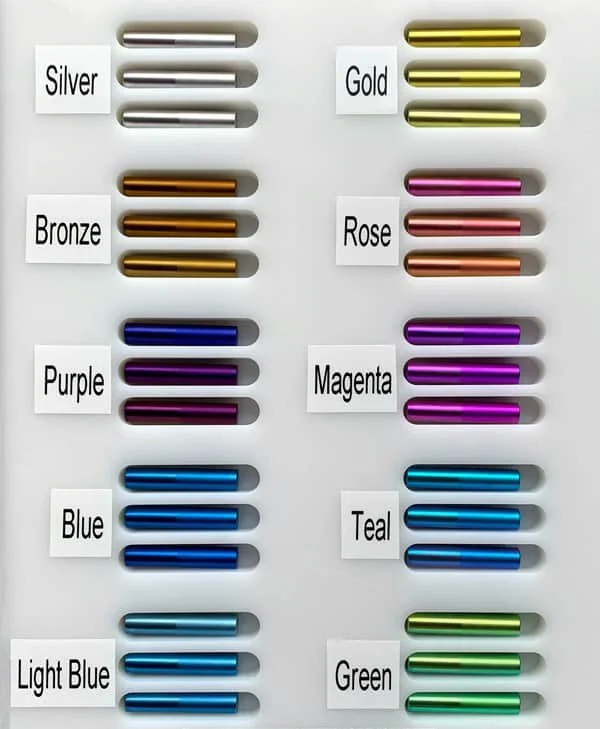
Add this on to any titanium piece and I can use electricity to change the colour.
Anodising is a process where electricity is used to change the color of titanium. Applying an electrical current to titanium in an electrolytic bath alters the thickness of the natural oxide layer on its surface. Light interference within that oxide layer produces visible colors without adding pigments or coatings.
Key points:
Color range: Anodising can produce a wide spectrum—from pale golds and blues to deep purples and greens—by precisely varying the voltage. Each voltage corresponds to a specific oxide thickness and thus a specific color.
No dyes or plating: The color comes from the oxide layer itself, so it won’t peel or flake away like paint or plating might.
Surface integrity: Properly performed anodising preserves titanium’s corrosion resistance and biocompatibility, making it suitable for body jewelry and medical uses.
Durability: While the color is stable, the oxide layer can scratch; lighter colors may show wear differently than darker ones. Regular care helps maintain appearance.
Cleanliness and safety: For piercings and jewelry, anodising must be done with clean, body-safe titanium and under controlled conditions to ensure no contaminants remain.
Anodised titanium offers vibrant, long-lasting color options for fine jewelry and piercings while retaining the metal’s strength and hypoallergenic properties.
Add this on to any titanium piece and I can use electricity to change the colour.
Anodising is a process where electricity is used to change the color of titanium. Applying an electrical current to titanium in an electrolytic bath alters the thickness of the natural oxide layer on its surface. Light interference within that oxide layer produces visible colors without adding pigments or coatings.
Key points:
Color range: Anodising can produce a wide spectrum—from pale golds and blues to deep purples and greens—by precisely varying the voltage. Each voltage corresponds to a specific oxide thickness and thus a specific color.
No dyes or plating: The color comes from the oxide layer itself, so it won’t peel or flake away like paint or plating might.
Surface integrity: Properly performed anodising preserves titanium’s corrosion resistance and biocompatibility, making it suitable for body jewelry and medical uses.
Durability: While the color is stable, the oxide layer can scratch; lighter colors may show wear differently than darker ones. Regular care helps maintain appearance.
Cleanliness and safety: For piercings and jewelry, anodising must be done with clean, body-safe titanium and under controlled conditions to ensure no contaminants remain.
Anodised titanium offers vibrant, long-lasting color options for fine jewelry and piercings while retaining the metal’s strength and hypoallergenic properties.